
We already have today what we need for tomorrow: “Indeed, many of the technologies and practices that solarpunks draw into their imaginings already exist: solar and other renewable energy, urban agriculture, or organic architecture and design.”
So, Solarpunk is ‘realistic optimism’ and is about envisioning climate solutions: “Solarpunk quickly grew beyond art, integrating with real-world activism and praxis as a paradigm to envision real futures … For practical inspiration, solarpunk looks to permaculture and Indigenous agriculture, sustainable architecture, as well as the maker movement and DIY culture.“
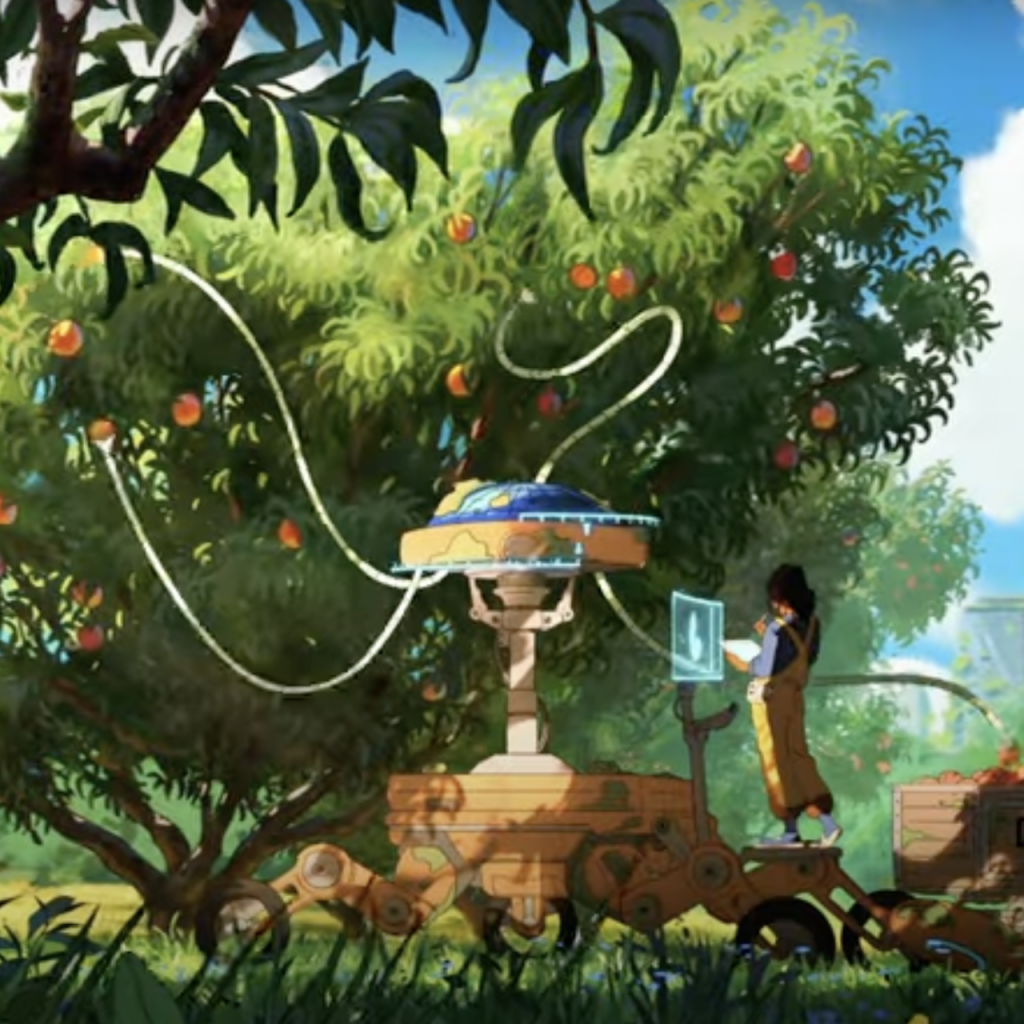
And perhaps robots can usher in a solarpunk future: “The solarpunk vision encourages technology to blend in with nature and human environments. With robots front and centre of this proposal, they should serve practical purposes on large and individual scales and create bonds with humans, making a more sustainable and enjoyable life possible with them.”
A very down-to-earth piece from Ian Bateman of Science for Sustainable Agriculture and land use economist at the University of Exeter warns of “The hidden costs of so-called ‘nature friendly farming’”: “A more evidence-based approach to land use policy is urgently needed to meet climate and biodiversity goals while maintaining domestic food production and avoiding the export of environmental harm to more vulnerable regions of the world. We must also embrace the technologies and innovations which can deliver low-impact increases in agricultural productivity”
What could be more Solar Punk?
…